5.00
(1 Rating)

Advanced Diploma in Disaster management.
By Farhan Dirie Uncategorized
Wishlist Share

About Course

Diploma in Disaster Management

A Diploma in Disaster Management is a specialized academic program designed to equip students with the knowledge, skills, and practical tools needed to effectively prepare for, respond to, and recover from natural and human-made disasters.

The course covers a broad range of topics including risk assessment, emergency planning, humanitarian response, community resilience, and post-disaster reconstruction. Students learn to understand the complex interplay between environmental, social, and political factors that shape how disasters unfold and how communities cope with them.

This program is ideal for those pursuing careers in civil defense agencies, NGOs, government emergency departments, international humanitarian organizations, or community development bodies. It bridges theory and practice by combining classroom learning with field exercises, case studies, and simulations.

As climate change intensifies the frequency and severity of disasters worldwide — from floods and droughts to earthquakes and disease outbreaks — the demand for trained disaster management professionals has never been greater. This diploma prepares graduates to be frontline leaders when communities need them most.

Show More

What Will You Learn?

  • Diploma in Disaster Management
  • What You Will Learn
  • 1. Fundamentals of Disaster Management
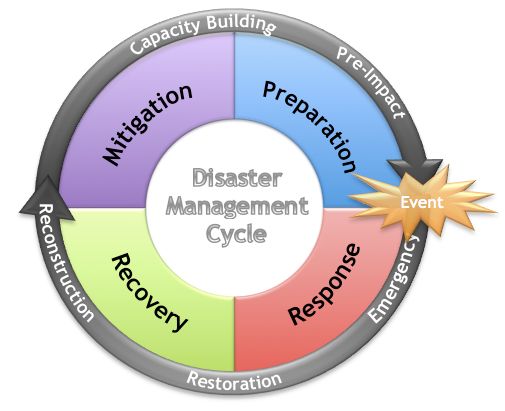
  • Understanding the types, causes, and phases of disasters — mitigation, preparedness, response, and recovery (the 4-phase cycle).
  • 2. Risk Assessment & Hazard Analysis
  • Identifying and evaluating natural and man-made hazards, vulnerability mapping, and community risk profiling.
  • 3. Emergency Planning & Preparedness
  • Developing emergency response plans, standard operating procedures (SOPs), and early warning systems for communities and organizations.
  • 4. Disaster Response Operations
  • Coordinating search and rescue, first aid, evacuation procedures, and managing relief operations during crisis situations.
  • 5. Humanitarian Aid & Relief Management
  • Principles of humanitarian assistance, managing food, shelter, and medical aid distribution in disaster-affected areas.
  • 6. Climate Change & Environmental Resilience
  • Understanding how climate change amplifies disaster risks and strategies for building long-term environmental resilience.
  • 7. Community-Based Disaster Risk Reduction (CBDRR)
  • Engaging and empowering local communities to reduce vulnerability and strengthen grassroots preparedness.
  • 8. Disaster Communication & Media Management
  • Crisis communication strategies, public information management, and effective use of media during emergencies.
  • 9. Legal & Policy Frameworks
  • International disaster law, national policies, and the role of frameworks like the Sendai Framework and UN SDGs in disaster risk reduction.
  • 10. Post-Disaster Recovery & Reconstruction
  • Planning and managing recovery programs, psychosocial support, livelihood restoration, and rebuilding infrastructure.

Course Content

introduction

  • introduction to disaster management
    00:00
  • Types of Disasters
    00:00

Aims of Disaster Mngt.

Student Ratings & Reviews

5.0
Total 1 Rating
5
1 Rating
4
0 Rating
3
0 Rating
2
0 Rating
1
0 Rating
7 years ago
Great clarity in explanations and thoroughly enjoyed the course. I had been working out for quite a while, but a few little things we might miss out from a diet perspective are covered well in detail here.
Especially loved how you structured the entire focus area of dieting into most important ones to lesser ones.